
CDI 1.0 Is Dead:
Why Traditional CDI Is Failing in the Era of AI-Driven Payer Audits and Clinical Validation Denials
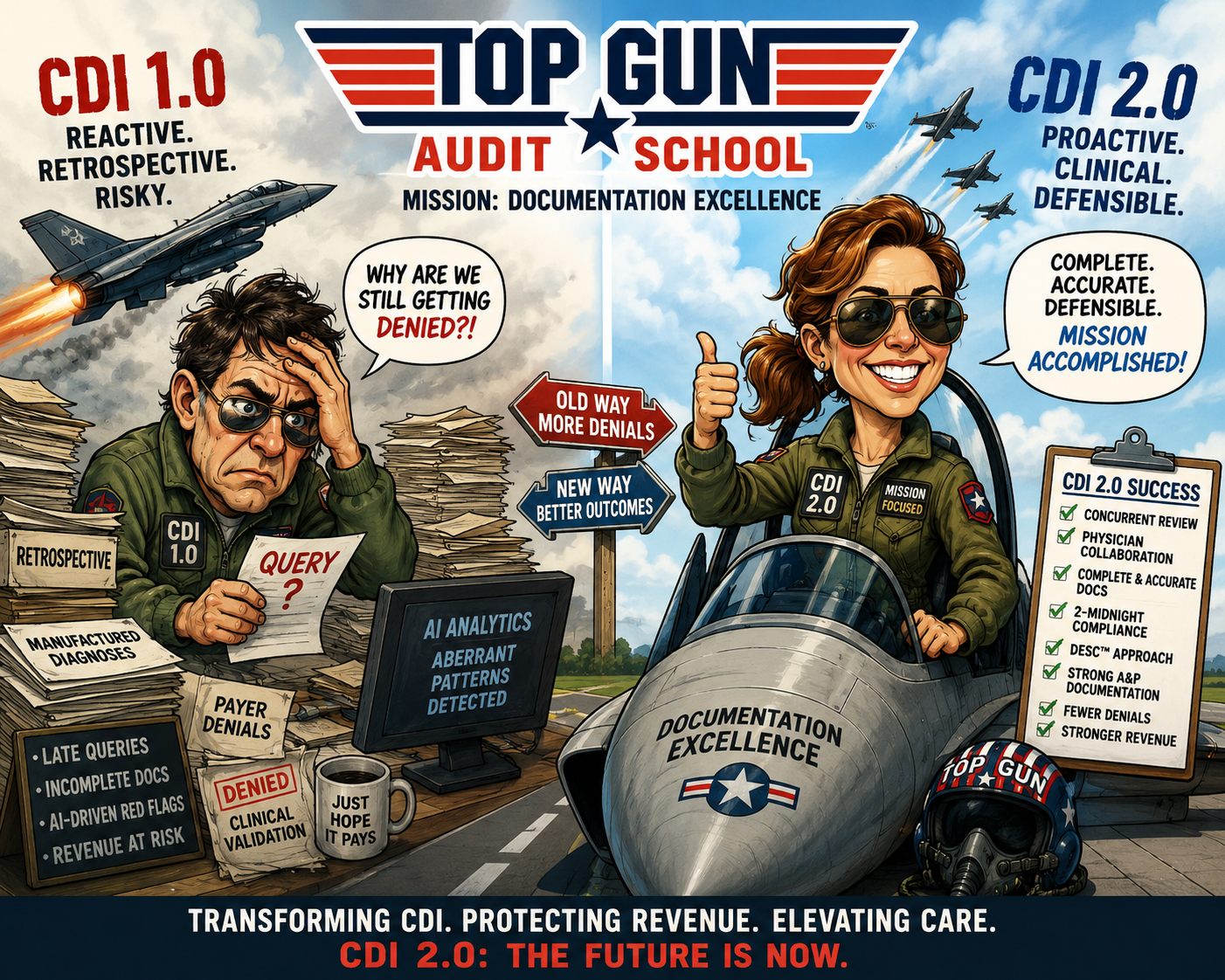
Part 1 of 2
This session examines the growing disconnect between traditional CDI practices and modern payer expectations for complete, clinically defensible physician documentation.
Participants will learn how retrospective, transactional, query-driven CDI processes contribute to ongoing denials, clinical validation failures, and allegations of manufactured diagnoses. Real inpatient case studies will demonstrate how payers leverage AI-driven data analytics to identify aberrant documentation, coding, and billing patterns.
Learning Objectives
By the end of this session, participants will be able to:
- Define the operational characteristics and limitations of CDI 1.0.
- Explain why retrospective query-focused CDI processes are increasingly ineffective in combating payer denials.
- Define “manufactured diagnoses” and identify compliance and audit risks associated with diagnosis-driven query practices.
- Recognize how AI-powered payer analytics identify aberrant documentation, coding, and billing patterns.
- Analyze real inpatient case studies involving:
o Clinical validation denials
o DRG downgrades
o Medical necessity denials
o Query-induced diagnosis disputes
- Identify how CDI query practices and AI CDI platforms may unintentionally contribute to compliance exposure and denial vulnerability.
- Discuss the evolving expectations of Medicare Advantage plans, RAC auditors, commercial payers, and regulatory agencies regarding complete and accurate physician documentation.
- Explain why documentation integrity must move beyond CC/MCC capture and focus on clinical credibility, medical necessity, and defensible physician thought processes.
- Understand how incomplete physician documentation weakens:
o Two-midnight compliance
o Medical necessity defense
o Clinical validation appeal success
o Revenue durability
- Introduce the framework for clinical transformation from CDI 1.0 to CDI 2.0.